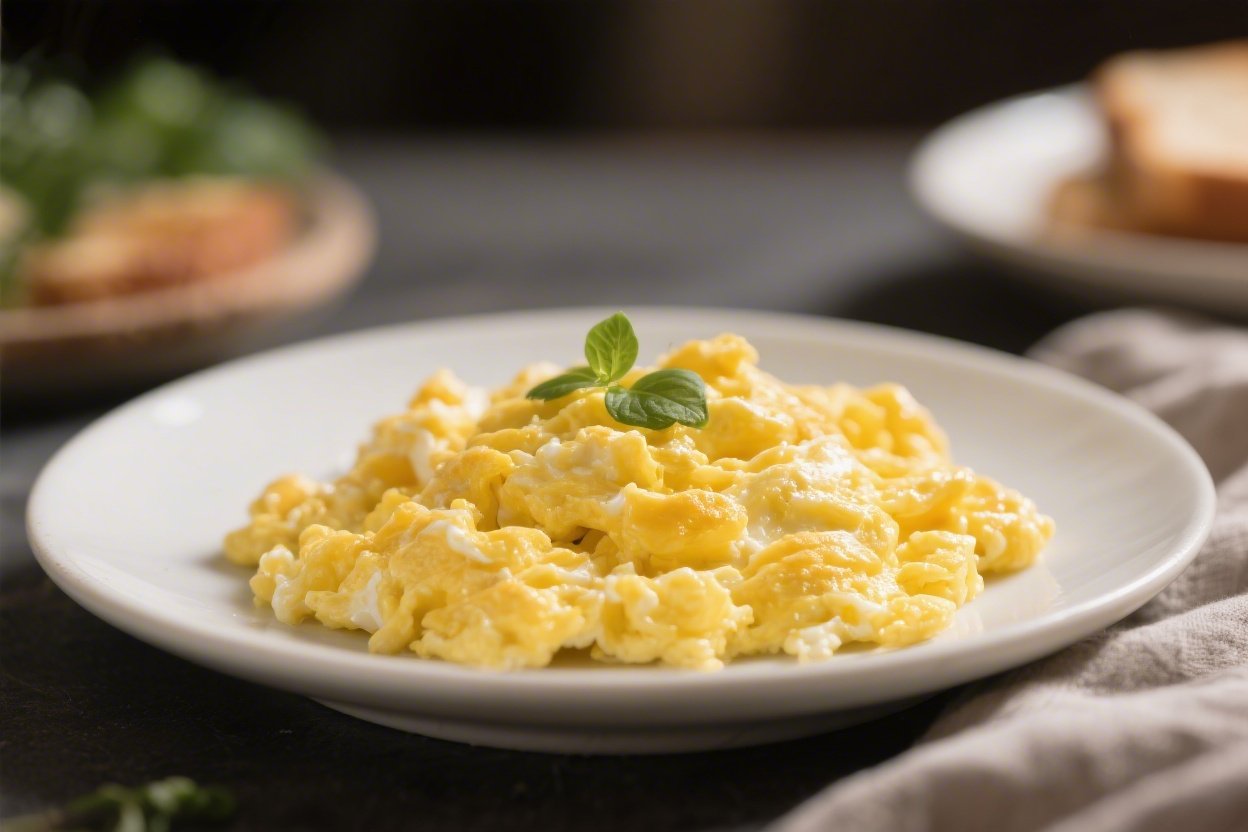
Perfect Scrambled Eggs – Soft, Creamy, and Foolproof
Scrambled eggs should be simple, but they’re easy to get wrong—too dry, too rubbery, or oddly watery. This version gives you soft, creamy curds with a gentle, custardy texture every time. You don’t need special tools or gourmet ingredients, just good technique and patience.
Once you nail the timing and heat, you’ll have a reliable breakfast staple that tastes like it came from a great café. Let’s keep it simple, stress-free, and delicious.
Ingredients
Method
- Crack and whisk. Crack the eggs into a bowl. Add the milk or cream if using. Whisk vigorously for 20–30 seconds until the mixture looks even and slightly frothy. Well-beaten eggs cook more evenly.
- Preheat the pan. Set a nonstick skillet over low to medium-low heat. Add the butter and let it melt gently without browning.
- Pour and wait. Pour the eggs into the pan. Don’t stir right away. Let the edges just begin to set—this should take 10–20 seconds.
- Stir slowly. Using a silicone spatula, push the eggs from the edges toward the center in slow, sweeping motions. Fold rather than scramble aggressively. You’re forming soft curds, not breaking them into tiny pieces.
- Manage the heat. If the eggs start cooking too fast, lift the pan off the heat and stir for 10–15 seconds, then return it. This on-off method keeps the texture creamy and prevents browning.
- Season at the right moment. When the eggs are about 70% set—still glossy and slightly loose—sprinkle with salt and pepper. Stir gently to distribute.
- Finish just shy of done. Remove the pan from the heat when the eggs look a touch undercooked. Residual heat will finish them in the next 15–30 seconds.
- Plate and garnish. Slide the eggs onto a warm plate to stop the cooking. Add chopped chives or parsley if you like. Serve immediately.
Why This Recipe Works
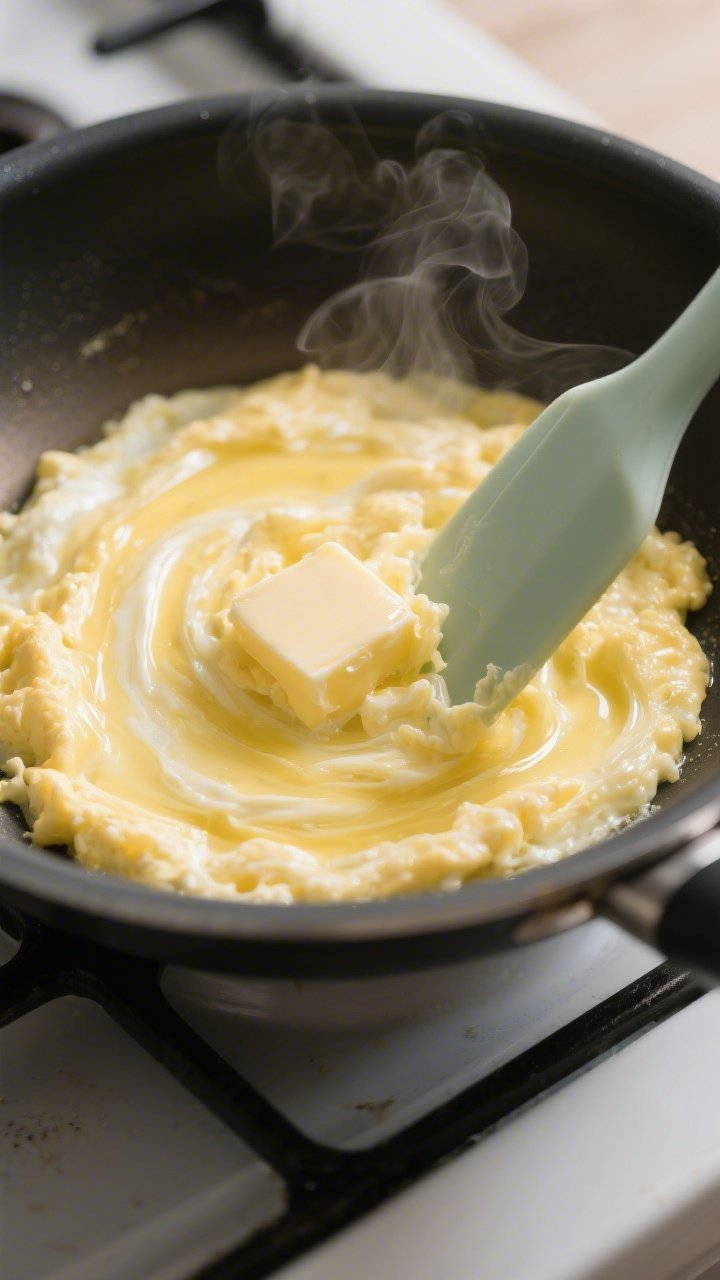
Low and slow heat keeps the proteins in the eggs from tightening too fast, which prevents dryness and rubbery texture. Gentle cooking creates tender curds and a creamy finish. Butter adds richness and helps the eggs glide in the pan, so they don’t stick or brown.
Beating the eggs well introduces air, which makes them lighter and fluffier.
A touch of dairy—like milk or cream—adds moisture and softness, but the real key is pulling the pan on and off the heat to control the cook. Seasoning at the right time ensures the eggs don’t weep water or taste flat.
Ingredients
- 4 large eggs
- 1 tablespoon unsalted butter
- 1 to 2 tablespoons milk or heavy cream (optional, for extra creaminess)
- Salt, to taste
- Freshly ground black pepper, to taste
- Fresh chives or parsley, finely chopped (optional, for garnish)
Instructions
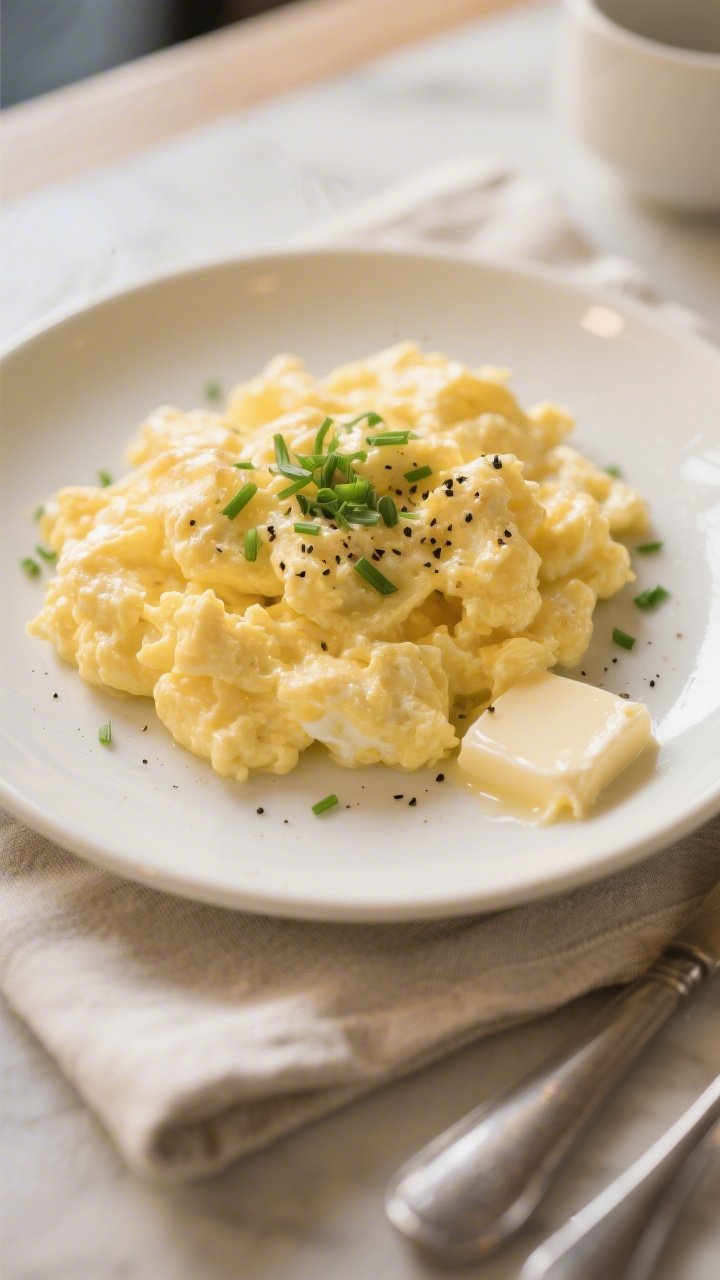
- Crack and whisk. Crack the eggs into a bowl. Add the milk or cream if using.
Whisk vigorously for 20–30 seconds until the mixture looks even and slightly frothy. Well-beaten eggs cook more evenly.
- Preheat the pan. Set a nonstick skillet over low to medium-low heat. Add the butter and let it melt gently without browning.
- Pour and wait. Pour the eggs into the pan.
Don’t stir right away. Let the edges just begin to set—this should take 10–20 seconds.
- Stir slowly. Using a silicone spatula, push the eggs from the edges toward the center in slow, sweeping motions. Fold rather than scramble aggressively.
You’re forming soft curds, not breaking them into tiny pieces.
- Manage the heat. If the eggs start cooking too fast, lift the pan off the heat and stir for 10–15 seconds, then return it. This on-off method keeps the texture creamy and prevents browning.
- Season at the right moment. When the eggs are about 70% set—still glossy and slightly loose—sprinkle with salt and pepper. Stir gently to distribute.
- Finish just shy of done. Remove the pan from the heat when the eggs look a touch undercooked.
Residual heat will finish them in the next 15–30 seconds.
- Plate and garnish. Slide the eggs onto a warm plate to stop the cooking. Add chopped chives or parsley if you like. Serve immediately.
Storage Instructions
Scrambled eggs taste best fresh, but you can store leftovers in an airtight container in the fridge for up to 2 days.
Reheat gently over low heat, stirring with a splash of milk or water to loosen. Avoid the microwave on high power—it can turn the eggs rubbery. If microwaving is your only option, use 50% power and heat in short bursts, stirring between each.
Health Benefits
- High-quality protein: Eggs offer complete protein, helping with muscle repair and steady energy.
- Vitamin and mineral boost: They provide B vitamins, selenium, choline for brain health, and small amounts of vitamin D.
- Satiety support: Protein and fat help you feel full, which can reduce snacking and support balanced eating.
- Customizable nutrition: Pair with veggies like spinach, tomatoes, or mushrooms for extra fiber and antioxidants.
Common Mistakes to Avoid
- Too much heat: High heat cooks the eggs fast and makes them dry.
Keep it low and patient.
- Overcooking: Pull the eggs off the heat while still glossy. They’ll keep cooking from residual heat.
- Under-whisking: If the yolks and whites aren’t fully combined, you’ll get streaky, uneven eggs.
- Adding salt too early: Salting before cooking can draw out moisture and create watery eggs. Season once they start to set.
- Neglecting the pan: A quality nonstick pan and a silicone spatula make a big difference in texture and ease.
- Walking away: Scrambled eggs cook quickly.
Stay present and adjust the heat as needed.
Recipe Variations
- French-Style Creamy Eggs: Cook over very low heat with constant stirring for 5–8 minutes. Finish with a teaspoon of crème fraîche for ultra-smooth curds.
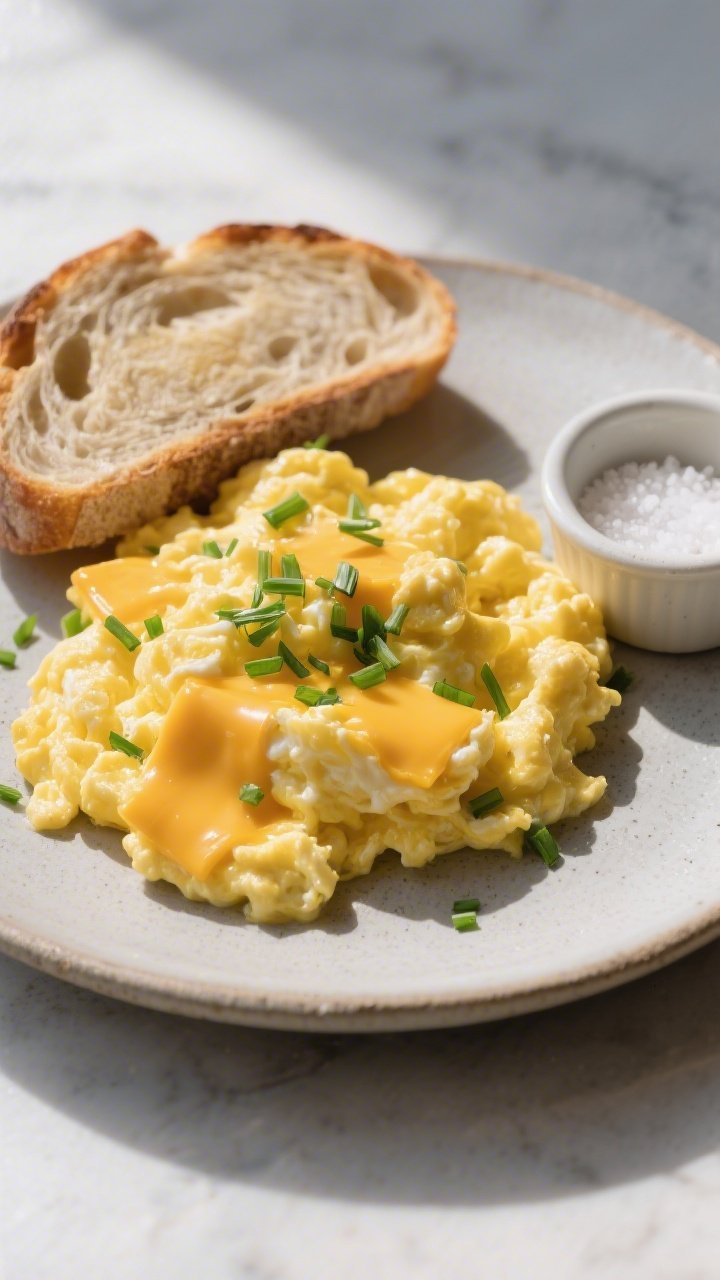
- Cheddar and Chive: Fold in 1/4 cup shredded sharp cheddar when the eggs are 70% set. Finish with fresh chives.
- Herb Garden: Add a mix of chopped dill, parsley, and chives at the end for a bright, fresh flavor.
- Mushroom and Spinach: Sauté sliced mushrooms in butter, wilt a handful of spinach, then add the eggs.
Season slightly more to balance the veggies.
- Smoked Salmon and Cream Cheese: Off the heat, fold in torn smoked salmon and small dollops of cream cheese. Add black pepper and chives.
- Spicy Breakfast Tacos: Season eggs with a pinch of chili powder and cumin. Serve in warm tortillas with salsa, avocado, and queso fresco.
FAQ
Should I use milk, cream, or water?
Use what matches your texture preference.
Milk or cream gives richer, silkier eggs. Water lightens the curds and keeps them tender. The most important factor is gentle heat and timing—dairy is optional.
Loved This Recipe?
If you're looking for more simple, healthy keto dinners, grab my FREE 7-Day Easy Keto Dinner Reset. You'll get 7 easy keto dinner recipes, simple grocery lists, and a done-for-you plan that takes the stress out of mealtime.
Why are my scrambled eggs watery?
They may be overcooked, salted too early, or cooked over high heat.
Also, watery add-ins like tomatoes can release moisture. Add juicy ingredients at the end or cook off their liquid first.
Can I make scrambled eggs without a nonstick pan?
Yes, but it’s trickier. Use a well-seasoned cast-iron or a stainless-steel skillet preheated on low with enough butter.
Keep the heat gentle and stir often to prevent sticking.
When should I add cheese?
Fold cheese in when the eggs are about 70% set. This gives it time to melt without breaking the texture or overcooking the eggs.
How many eggs per person?
Plan on 2 eggs per person for a standard serving. If you’re adding fillings like veggies, cheese, or meat, you can stretch it a bit further.
Can I meal-prep scrambled eggs?
You can, but they won’t be as creamy after reheating.
For better results, slightly undercook them, cool quickly, store for up to 2 days, and reheat gently with a splash of milk.
Is it safe to eat runny scrambled eggs?
Scrambled eggs should be softly set but not raw. Cook until thickened and no liquid egg remains. If you’re concerned about safety, use pasteurized eggs and ensure they reach a safe temperature.
What’s the best fat: butter or oil?
Butter adds flavor and a silky finish.
A neutral oil works, but you’ll miss the buttery taste. For a balance, use a mix of butter and a little olive oil to prevent browning.
Why do my eggs turn brown in the pan?
The heat is too high or the pan is too hot before the eggs go in. Browned eggs taste a bit sulfury and dry.
Lower the heat and cook slowly to keep them yellow and tender.
Can I make them dairy-free?
Yes. Skip the milk and use a dairy-free fat like olive oil or a plant-based butter. Focus on slow cooking and proper whisking for creamy results without dairy.
Wrapping Up
Perfect scrambled eggs are all about control: low heat, steady stirring, and pulling them off the stove before they look done.
With a good pan, a spatula, and a few minutes of attention, you’ll get soft, custardy curds every time. Keep it simple on a busy morning, or dress them up for brunch with herbs, cheese, or veggies. Once you master the basics, this quick meal becomes endlessly reliable—and always satisfying.
Printable Recipe Card
Want just the essential recipe details without scrolling through the article? Get our printable recipe card with just the ingredients and instructions.
Need More Easy Keto Dinner Ideas?
Get my FREE 7-Day Easy Keto Dinner Reset and enjoy a full week of healthy dinners without the meal-planning stress.